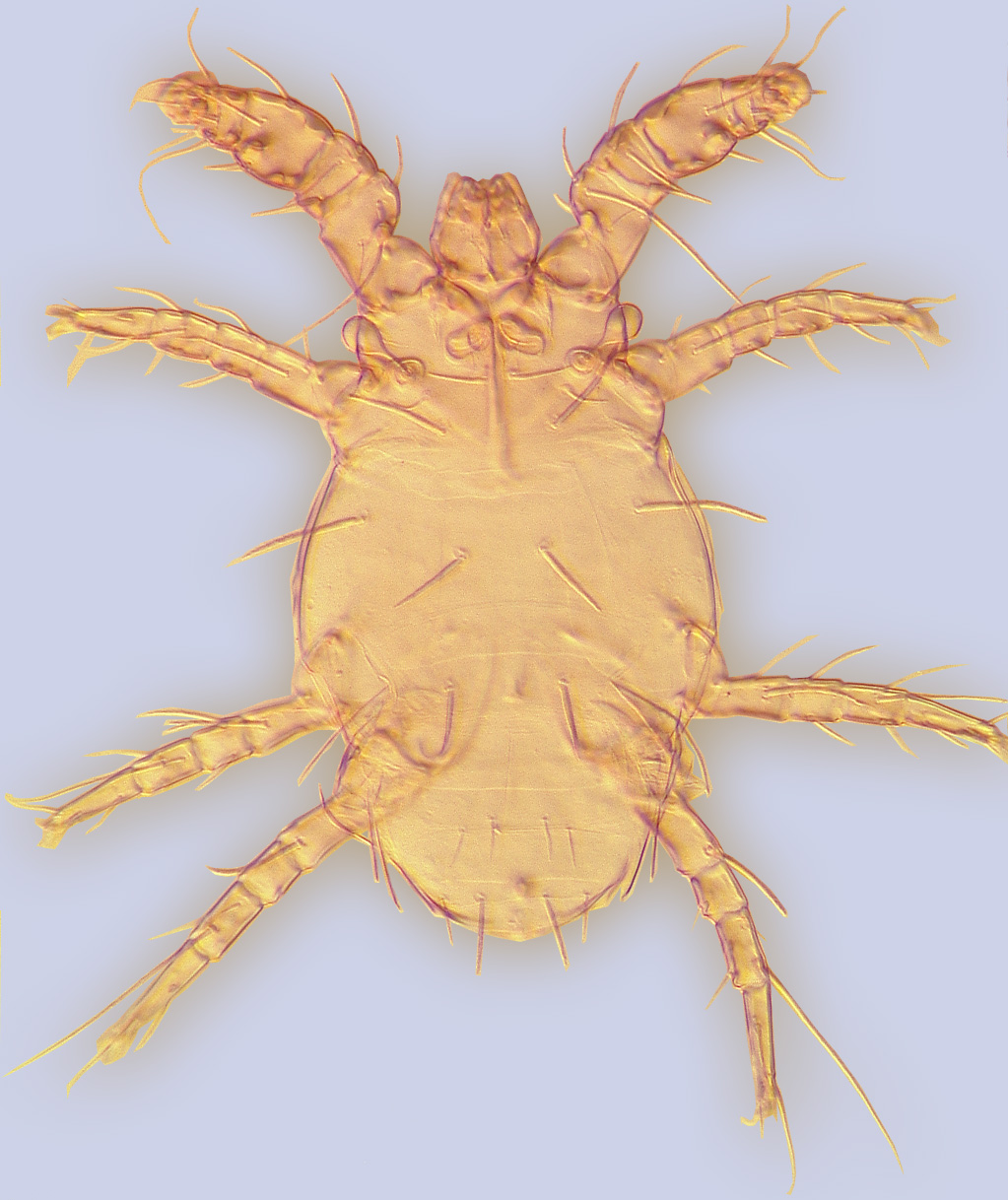
Fig. 1. Mite Trochometridium tribulatum (Trochometridiidae), female, dorsal view, ex Melissodes sp. (Hymenoptera: Apidae). Click here to enlarge
|
Back | Home | UMMZ Acari
Family Trochometridiidae Mahunka, 1970
This family is monotypic, with the single genus Trochometridium Cross (Lindquist, 1986).
Genus Trochometridium Cross, 1965
Trochometridium Cross, 1965 116 (Type species Trochometridium tribulatum Cross, 1965 by original designation).
The genus includes three nominal species. Trochometridium tribulatum Cross is a polyxenous cleptoparasite of ground nesting bees in the Nearctic and Afrotropic regions. Trochometridium chinensis (Mahunka, 1966) is a polyxenous cleptoparasite of wasps in the Oriental region. Trochometridium kazachstanicum Khaustov et Eidelberg, 2002 has been found on a carabid beetle of the genus Machozetus in the Palaearctic region. In addition, an undescribed species has been recorded from Lasioglossum eremaean in Australia (Cross and Bohart, 1979; Khaustov et Eidelberg, 2002; Lindquist, 1986; Walter et al., 2002).
Biology is only known for Trochometridium tribulatum (see below).
Trochometridium tribulatumCross, 1965
Trochometridium tribulatum Cross, 1965: 120, Figs 29-40; Lindquist, 1985: 1974, Figs 1-5.
Material. 1 female - USA: Arizona, Cochise Co., 3 km S Apache (31°40'46.9''N 109°08'21.2'W 109°08'21.2''W), ex front head and pronotum of female Melissodes sp. (Hymenoptera: Apidae), 21 Aug 2003, P. Klimov, UMMZ BMOC 03-0821-006; 1 female - Arizona, Maricopa Co., Tempe, ex legs, propodeum and abdomen of female of Megachile parallela Smith, 1853 (Hymenoptera: Megachilidae), 3 Aug 1917, Cornell University expedition, CUIC BMOC 79-0806-002; 1 female - USA: Idaho, Canyon Co., 10 mi E Nampa, ex propodeum of Diadasia enavata (Cresson, 1872) (Hymenoptera: Apidae), 6 Jul 1960, P. F. Torchio, UCD BMOC 95-0613-007.
Biology. The host range includes andrenid, halictid, megachilid, and apid bees, as well as sphecid wasps and Coleoptera. Perhaps beetles become infested by mites dispersing from bees or wasps nesting in the same soil. The dispersing stage is the adult female. The female has a pair of internal sacs between legs III and IV that are termed sporothecae. Sporothecae contain fungal spores which are transferred by the mite to provisioned cells of ground nesting bees. So far the mite is known from the nests of bees of the genera of Calliopsis, Nomia, Halictus, and Anthemurgus. The bee egg or young larva dies in the infested cell as a result of development of the fungus and mites. Eggs are laid instead of being retained within the physogastric mother. These hatch into inactive larvae, which molt to males and females. The new generation of mites develops upon the fungal mycelium. The female is the only stage that feeds (Cross and Bohart, 1979; Lindquist, 1986; Neff and Rozen, 1995).
Distribution. Canada: British Columbia; USA: Maryland, Idaho, California, Utah (type locality), Iowa, Kansas, Texas, Arizona, Alabama; Mexico: Tamaulipas; Egypt: Gizah; Sudan, South Africa: Gauteng (Cross and Bohart, 1979; Lindquist, 1985; our data).
Hosts (some records are probably accidental). North America: Calliopsis (Nomadopsis) scutellaris Fowler, 1899; Calliopsis (Nomadopsis) anthidia Fowler, 1899; Calliopsis (Calliopsis) andreniformis Smith, 1853; Calliopsis (Calliopsima) coloradensis Cresson, 1878; Anthemurgus passiflorae Robertson, 1902 (Hymenoptera: Andrenidae); Halictus farinosus Smith, 1853 (type host); Halictus ligatus Say, 1837; Sphecodes arvensiformis Cockerell, 1904; Nomia (Acunomia) melanderi Cockerell, 1906; Nomia (Epinomia) nevadensis Cresson, 1874; Nomia nevadensis bakeri Cockerell, 1898. (Hymenoptera: Halictidae); Megachile parallela (Hymenoptera: Megachilidae); Oreopasites scituli Cockerell, 1906; Exomalopsis birkmanni Cockerell, 1922; Melissodes fimbriata Cresson, 1878 (reported as "Melissoides fimbrioides"); Diadasia enavata (Cresson, 1872) (Hymenoptera: Apidae); Myrmosa unicolor Say 1824, Dasymutilla sp. (Hymenoptera: Mutillidae); Liris argentata (Beavois, 1811) (Hymenoptera: Sphecidae); Cicindela willistoni LeConte 1879 (Coleoptera: Carabidae). Afrotropic region: Aphodius sp. (Coleoptera: Scarabaeidae), Ossibia sp. (Coleoptera: Cerambycidae) (Cross and Bohart, 1979; Lindquist, 1985; Neff and Rozen, 1995; our data).
References
Cross E. A. 1965. The generic relationships of the family Pyemotidae (Acarina: Trombidiformes). The University of Kansas Science Bulletin. 45(2): 29-275.
Cross E. A., Bohart G. E. 1979. Some observations of the habits and distribution of Trochometridium Cross, 1965 (Acarina: Pyemotidae). Acarologia. 20(2): 286-293.
Khaustov A. A., Eidelberg M. M. 2002. A new species of mites of the genus Trochometridium (Acarina: Heterostigmata: Trochometridiidae) from Kazakhstan. Acarina. 10(1): 43-45.
Lindquist E. E. 1985. Discovery of sporothecae in adult female Trochometridium Cross, with notes on analogous structures in Siteroptes Amerling (Acari: Heterostigmata). Experimental and Applied Acarology. 1: 73-85.
Lindquist E. E. 1986. The world genera of Tarsonemidae (Acari: Heterostigmata): A morphological, phylogenetic, and systematic revision, with a reclassification of family-group taxa in the Heterostigmata. Memoirs of the Entomological Society of Canada. 136: 1-517.
Neff J. L., Rozen J. G. 1995. Foraging and nesting biology of the bee Anthemurgus passiflorae (Hymenoptera: Apoidea), descriptions of its immature stages, and observations on its floral host (Passifloraceae). American Museum Novitates. 3138: 1-19.
Walter D. E., Beard J. J., Walker K. L. and Sparks K. 2002. Of mites and bees: A review of mite-bee associations in Australia and a revision of Raymentia Womersley (Acari: Mesostigmata: Laelapidae), with the description of two new species of mites from Lasioglossum (Parasphecodes) spp. (Hymenoptera: Halictidae). Australian Journal of Entomology. 41: 128-148.
B. OConnor and P. Klimov ©
Created: Dec 26, 2003
Last modified: