Back | Home | UMMZ Acari
Family Macrochelidae Vitzthum, 1930
This family includes 14 genera. Two of them, Trigonholaspis and Macrocheles, have been recorded from bees (Chmielewski, 1991; De Jong et al., 1982; Krantz, 1998; Richards and Richards, 1977).
Key to genera of the family Macrochelidae associated with bees
1. Four pairs of opisthonotal dorsocentral setae (J1, J2, J3, J5). Anterodorsal "hump" present. Sternal shield not coarsely punctate ... Trigonholaspis
- Two, rarely three, pairs of opisthonotal dorsocentral setae. Anterodorsal "hump" absent. Some areas of sternal shield often coarsely punctate... Macrocheles
Genus Macrocheles Latreille, 1829
Macrocheles Latreille, 1829: 282 (Type species Acarus marginatus Harmann, 1804 (=Acarus muscae domesticae Scopoli, 1772) by original designation); Krantz, 1962: 146 (His synonymy).
This large cosmopolitan genus includes species that inhabit a variety of habitats: soil, humus, forest litter, moss, dung, hay, rotting stumps, galleries of bark beetles and subcortical situations, nests of rodents, birds, mammals, and bumblebees. The mites are often phoretic on insects of the orders Coleoptera and Diptera. Two, apparently related, species are known from bumblebees: Macrocheles rotundiscutis Bregetova and Koroleva, 1960 (=Macrocheles bombophilus Goetz, in Hirschmann, 1970) from Europe and Macrocheles praedafimetorum Richards and Richards, 1977 from North America (see biological account on this species below). Three other species, Macrocheles muscaedomesticae (Scopoli, 1772), Macrocheles nataliae Bregetova et Koroleva, 1960, Macrocheles glaber (Müller, 1860), and Macrocheles martius (Hull, 1925), have been reported from the honey bee, Apis mellifera L. (Banaszak, 1980; Chmielewski, 1991; Haragsim et al., 1978). The two latter species are incidental inhabitants of hives, and they probably use honeybees for transport (Chmielewski, 1991). Lo and Chao (1975) reported a macrochelid mite (probably a Macrocheles) in Taiwan that occurs in the flowers of loquat (Eriobotrya japonica Lindl. (Thunb.) (Rosales: Rosaceae)) in the spring and uses both indigenous (Apis cerana Fabricius, 1793) and introduced (Apis mellifera) bee species for dispersal.
Macrocheles praedafimetorum Richards et Richards, 1977
Macrocheles praedafimetorum Richards et Richards, 1977: 711, Figs 1-7.
Material examined (paratypes). 1 male - Canada: Alberta, Bluff Mt. [label reads Prairie Bluff Mt.], 49°20'N 114°06'W, ex nest of Bombus terricola (=B. occidentalis), 16 Aug 1971, K. and L. Richards, USDA-Maryland; 1 male, same data, ex nest of Bombus bifarius; 2 females, 1 deutonymph - same data, ex nest of Bombus terricola, 7 Aug 1971; 1 protonymph - same data, 4 Aug 1974; 1 larva - Canada: Alberta, Lethbridge, laboratory culture, 4 Dec 1975, K. and L. Richards, USDA-Maryland.
Biology. Macrocheles praedafimetorum is a polyxenous species occurring in the nests of many species of bumble bees, although fewer in the nests of Bombus rufocinctus and B. appositus, which emerge and construct nests later in the spring.
The mated female mite is the phoretic stage. Bumble bees are not the vector on which this mite entered the nests. A dung-inhabiting beetle, Onthophagus nuchicornis L. (Coleoptera: Scarabaeidae), was observed entering a bumble bee nest with three female mites attached. This beetle is apparently attracted to the bumble bee nests by the decaying material in the bottom of the nest.
Macrocheles praedafimetorum is a predatory mite. It can feed on the nematode Caenorhabditis sp., which occurs in profuse numbers in moist rotting material in bumble bee nests. The mite was also observed feeding on the eggs, larvae, and adults of Coboldia fuscipes (Meigen) (Diptera: Scatopsidae) and an unidentified psychodid. Larvae of these flies feed on the decaying nest material, and populations are high in some nests. These mites are cannibalistic; newly molted protonymphs were observed eating larvae, while females ate larvae and protonymphs. Perhaps in response to this behavior, females laid up to 10 eggs inside empty fly pupal cases.
Macrocheles praedafimetorum is an arrhenotokous species, the unfertilized females producing only males and fertilized females giving rise to both sexes. Average life span for males is 21.8 days (range 6-49, n=19), which is significantly shorter than that for females, 36.2 days (range 13-73, n=9). Females more commonly occur in the nests, because the females live longer in the phoretic stage and withstand greater environmental fluctuations (i.e., reduced humidity and food) than the males. Most females must mate before dispersing as they produce both males and females upon arrival at the new food source. Males apparently sense when female deutonymphs are about to molt. The male climbs on the female's back and remains until she molts, at which time it crawls under the female, positioning itself so that its chelicera meet the female's genital plates. Spermatophores are then transferred by the chelicera.
The mites are also common in artificial domiciles. Underground domiciles were preferred probably because the early nesting bumble bee species that occupied these domiciles had larger populations resulting in more accumulating debris and decaying material. The mite does not appear to prefer domiciles placed in open meadows or above ground. Those domiciles were usually drier, had less decaying material, and fewer debris-feeding organisms. The mite was also found in cattle dung.
Macrocheles praedafimetorum has no direct effect on the bumble bee population within the nest. The mite exploits a wide range of saprophagous organisms common to dung, decaying matter, and bumble bee nests (after Richards and Richards, 1977).
Distribution. Canada: Alberta.
Hosts.
Bombus (Bombias) nevadensis Cresson, 1874
Bombus (Bombus) terricola Kirby, 1837 (as occidentalis)
Bombus (Cullumanobombus) rufocinctus Cresson, 1863
Bombus (Fervidobombus) fervidus (Fabricius, 1798) (as californicus)
Bombus (Pyrobombus) bifarius Cresson, 1878
Bombus (Pyrobombus) centralis Cresson, 1864
Bombus (Pyrobombus) flavifrons Cresson, 1863 (type host)
Bombus (Pyrobombus) frigidus Smith, 1854
Bombus (Pyrobombus) huntii Greene, 1860
Bombus (Pyrobombus) melanopygus Nylander, 1848
Bombus (Pyrobombus) mixtus Cresson, 1878
Bombus (Pyrobombus) ternarius Say, 1837
Bombus (Pyrobombus) vagans Smith, 1854
Bombus (Subterraneobombus) appositus Cresson, 1878
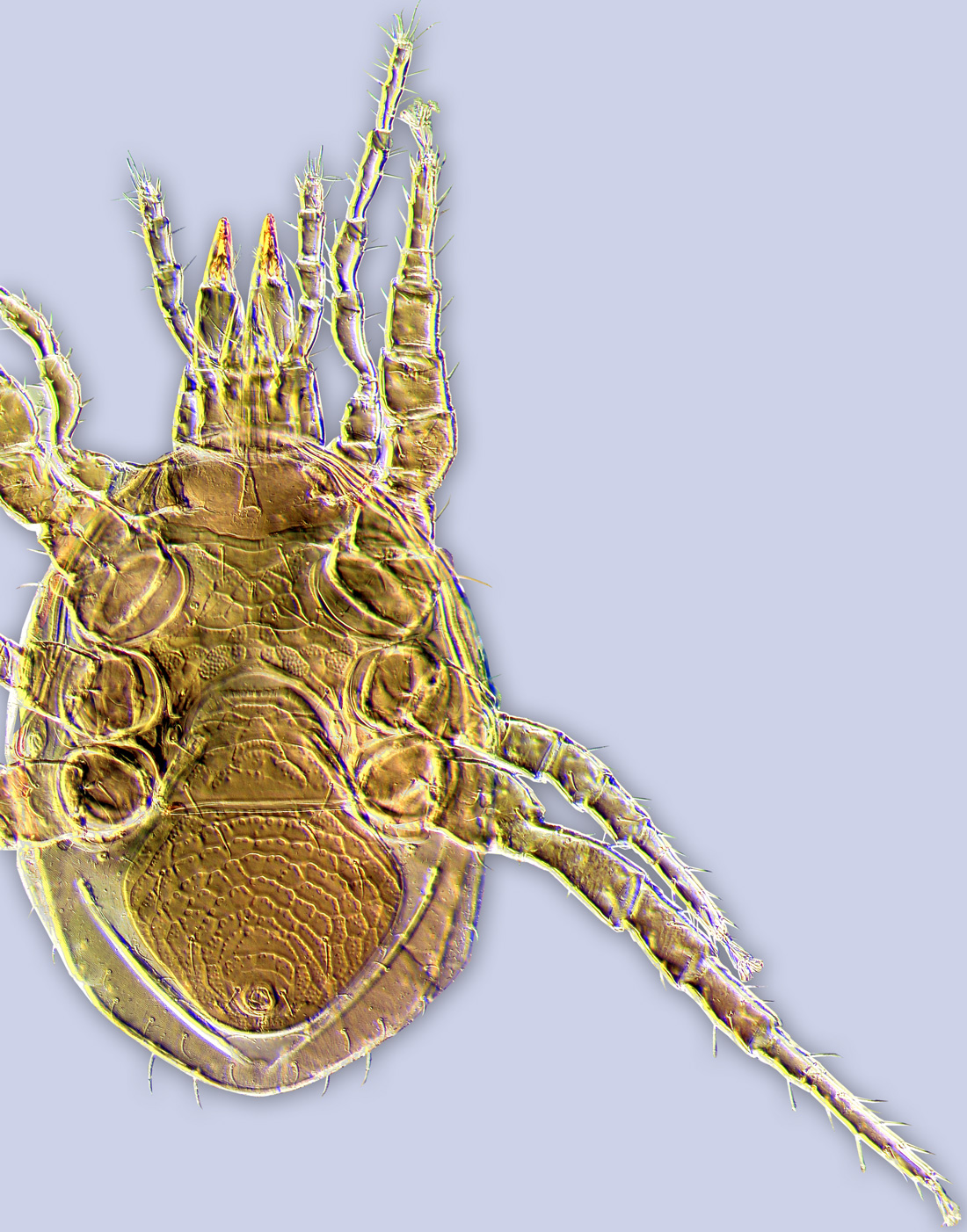
 Fig. 2. Trigonholaspis sp. (Acari: Macrochelidae) ex nest of the stingless bee Lestrimelitta limao. Click here to enlarge |
Genus Trigonholaspis Vitzthum, 1930
Trigonholaspis Vitzthum, 1930: 300 (Type species Trigonholaspis salti Vitzthum, 1930 by original designation); Krantz, 1962: 161; Krantz, 1998: 105.
Graffia Krantz, 1962: 163 (Type species Trigonholaspis trigonarum Vitzthum, 1930 by original designation). Synonymyzed by Krantz, 1998.
This genus includes four named species that inhabit nests of Trigona amalthea (Apidae: Meliponini) in Columbia (Vitzthum, 1930). Krantz (1998) reported five additional undescribed species from Brazil and Panama. We have seen an undescribed species from a nest of Lestrimelitta limao (Smith) from Panama. Individuals of this bee species rob nests of other bees, especially species of the genera Plebeia, Nannotrigona, more rarely Melipona, Scaptotrigona, and Trigona (Michener, 2000). The biology is almost unknown. Salt (1929) reported his observations on Trigonholaspis associated with Trigona amalthea (probably more than one species): "Mites are present on the comb in large numbers, as many as five or six together on the top of a single cell. In one or two cases I have seen these mites inside closed cells. On breaking open one cell in particular I found a bee pupa, its eyes only faintly colored, with a brown mite attached to it under the thorax apparently to the left middle leg; the mite was conspicuous as soon as the cell was opened. Mites are only rarely to be found on the pollen-and honey-pots, but on the comb are very numerous."
Description. Setae J1, J2, J3 present; anterior dorsum with well-developed "hump" (Krantz, 1998).
Key to species of the genus Trigonholaspis
females
1. Dorsal shield margin not undulate. Dorsum without blunt cylindrical setae. Medial preanal setae placed approximately at same distance from anterior and posterior preanal seta ... 2
- Dorsal shield margin undulate. Dorsum with blunt cylindrical setae. Medial preanal setae shifted anteriorly, distance between it and transverse level of anterior setae shorter than distance between it and transverse level of posterior preanal seta ... 3
2(1). Shortest distance between anterior and posterior edges of sternal shield more than twice as short as diameter of coxa II. Setae of sternal, metasternal and epigynial (ST1-5) shields distinctly longer than anus. Many dorsal setae slightly inflated at bases and with rounded membranous end ... Trigonholaspis sp ex Lestrimelitta limao
- Shortest distance between anterior and posterior edges of sternal shield approximately equal to diameter of coxa II. Setae of sternal, metasternal and epigynial (ST1-5) shields distinctly shorter than anus. Dorsal setae (except for J1) short, filiform ... Trigonholaspis salti
3(1). Epigynial shield 3-lobed posteriorly, with ST5 placed distinctly mediad from lateral extremities of the shield. ... Trigonholaspis columbiana
- Epigynial shield not 3-lobed posteriorly (if lateral lobes present then small, not reaching posterior level of epigynial shield), with ST5 placed on or close to its lateral margin ... 4
4(3) Dorsal shield truncate posteriorly. Setae on anterior margin of dorsal shield filiform; setae on posterior margin of dorsal shield not reaching base of subsequent setae. Preanal setae short, not reaching bases of subsequent setae ... Trigonholaspis trigonarum
- Dorsal shield smoothly rounded posteriorly. Setae on anterior margin of dorsal shield inflated, with distinct bulb-like bases; setae on posterior margin of dorsal shield reaching bases of subsequent setae. Preanal setae reaching bases of subsequent seta ... Trigonholaspis amaltheae
Trigonholaspis salti Vitzthum, 1930
Trigonholaspis salti Vitzthum in Salt, 1929: 447 (nomen nudum); Vitzthum, 1930: 301, Figs 10-13; Krantz, 1962: 161; Krantz, 1998: 106.
Biology. Collected in a nest of Trigona amalthea.
Distribution. Colombia: Magdalena.
Hosts. Trigona amalthea (Olivier, 1789).
Trigonholaspis columbiana Vitzthum, 1930
Trigonholaspis columbiana Vitzthum in Salt, 1929: 447 (nomen nudum); Vitzthum, 1930: 305, Figs 14-15; Krantz, 1998: 106.
Grafia columbiana: Krantz, 1962: 163.
Biology. Collected in a nest of Trigona amalthea.
Distribution. Colombia: Magdalena.
Hosts. Trigona amalthea (Olivier, 1789).
Trigonholaspis trigonarum Vitzthum, 1930
Trigonholaspis trigonarum Vitzthum in Salt, 1929: 447 (nomen nudum); Vitzthum, 1930: 308, Figs 16-18; Krantz, 1998: 106.
Biology. Collected in a nest of Trigona amalthea.
Distribution. Colombia: Magdalena.
Hosts. Trigona amalthea (Olivier, 1789).
Trigonholaspis amaltheae Vitzthum, 1930
Trigonholaspis amaltheae Vitzthum in Salt, 1929: 447 (nomen nudum); Vitzthum, 1930: 311, Figs 19-22; Krantz, 1998: 106.
Biology. Collected in a nest of Trigona amalthea.
Distribution. Colombia: Magdalena.
Hosts. Trigona amalthea (Olivier, 1789).
Trigonholaspis sp.
Material examined. 3 females, 10 males - PANAMA: Colón Prov., Parque Nacional Soberania, 11 km N Gamboa, Pipeline Rd., nest of Lestrimelitta limao (Smith, 1863) (Hymenoptera: Apidae: Meliponini), 6 Apr 1988, D. Roubik, BMOC 88-0729-001.
Biology. Collected in a nest of Lestrimelitta limao. The mites were possibly originated from the nests of other stingless bees that have been robbed by L. limao.
Distribution. Panama: Colón.
Hosts. Lestrimelitta limao (Apidae).
References
Banaszak J. 1980. [Investigations of the fauna associated in bee-hives]. Fragmenta Faunistica. 25(10): 127-177.
Chmielewski W. 1991. Roztocze (Acarida) pszczoly miodnej (Apis mellifera L.) w Polsce. Wiadomosci Parazytologiczne. 37(1): 91-94.
De Jong, D., Morse R. A. and Eickwort G. C. 1982. Mite pests of honey bees. Annual Review of Entomology. 27: 229-252.
Haragsim O., Samsinak K., Vorbazkova E. 1978. The mites inhabiting the bee hives in CSR. Zeitschrift für angewandte Entomologie. 87: 52-67.
Krantz G. W. 1962. A review of the genera of the family Macrochelidae Vitzthum 1930 (Acarina: Mesostigmata). Acarologia. 4(2): 143-173.
Krantz G. W. 1998. Observations on five rarely collected genera of Macrochelidae (Acari: Mesostigmata) associated with insects. Acarologia. 39(2): 95-109.
Lo K.-C., Chao R.-S. 1975. The preliminary investigations on bee mites in Taiwan. Zhonghua nong ye yan jiu [=Journal of Agricultural Research of China]. 24(12): 50-56.
Michener C. D. 2000. The Bees of the World. The John Hopkins University Press, Baltimore and London. 913 pp.
Richards K. W., Richards L. A. 1977. A new species of Macrocheles (Acarina: Macrochelidae) found in bumble bee nests (Hymenoptera: Apidae). Canadian Entomologist. 109: 711-719.
Salt G. 1929. A contribution to the ethology of the Meliponinae. Transactions of the Entomological Society of London. 77(2): 431-468+29 Plates.
Vitzthum H. G. 1930. Acarologische Beobachtungen. Zoologische Jahrbücher (Systematik). 59(2/3): 281-350.
B. OConnor and P. Klimov ©
Created: Mar 24, 2004
Last modified: